


The Learning Collection · Bambu Lab
R1 Series
R1
55W CO₂ laser
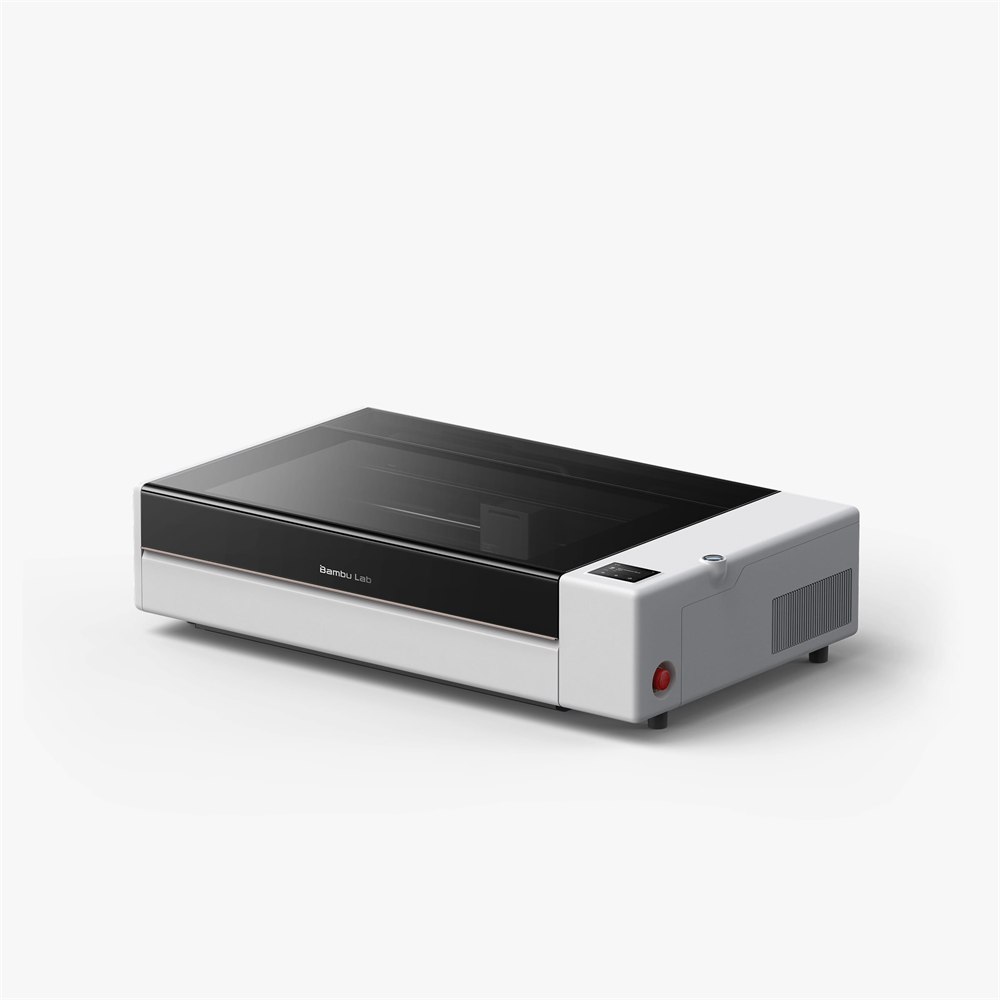
The R1 is Bambu Lab’s 55W CO₂ laser engraver and cutter. It cuts and engraves wood, acrylic (including clear acrylic), leather, fabric, paper, EVA foam and shell, and engraves coated metal, glass and ceramic — with a 600 × 300 mm working area and automatic laser alignment.
Order-in — estimated 20–30 days
Pay online by card. Collect at TT3 (Vincenzo Labs) or Galacity / Saradise (TLC) — we email you when it is ready.
- Price includes SST
- Yes — no tax is added later
- Prices valid
- Until further notice
- Availability
- Order-in
- Lead time
- Estimated 20–30 days
- Pickup
- Free in Kuching — TT3 (Vincenzo) or Galacity / Saradise (TLC)
- Ordering
- Available now — pay by card
Lead times are estimates, not delivery promises. Prices include SST and are valid until further notice.
Ask about this product
Send a question and we will reply by email or phone — usually within one working day. No order or payment is created.
At a glance
Key highlights
55W CO₂ laser
Cuts 18 mm black walnut plywood and 20 mm acrylic in a single pass with the medium- or long-focus lens (sold separately).
600 × 300 mm working area
Extends to 600 × 3000 mm with the optional Conveyor for long boards.
Up to 1000 mm/s
Bambu Lab rates the maximum speed at 1000 mm/s with 20,000 mm/s² acceleration.
Automatic alignment
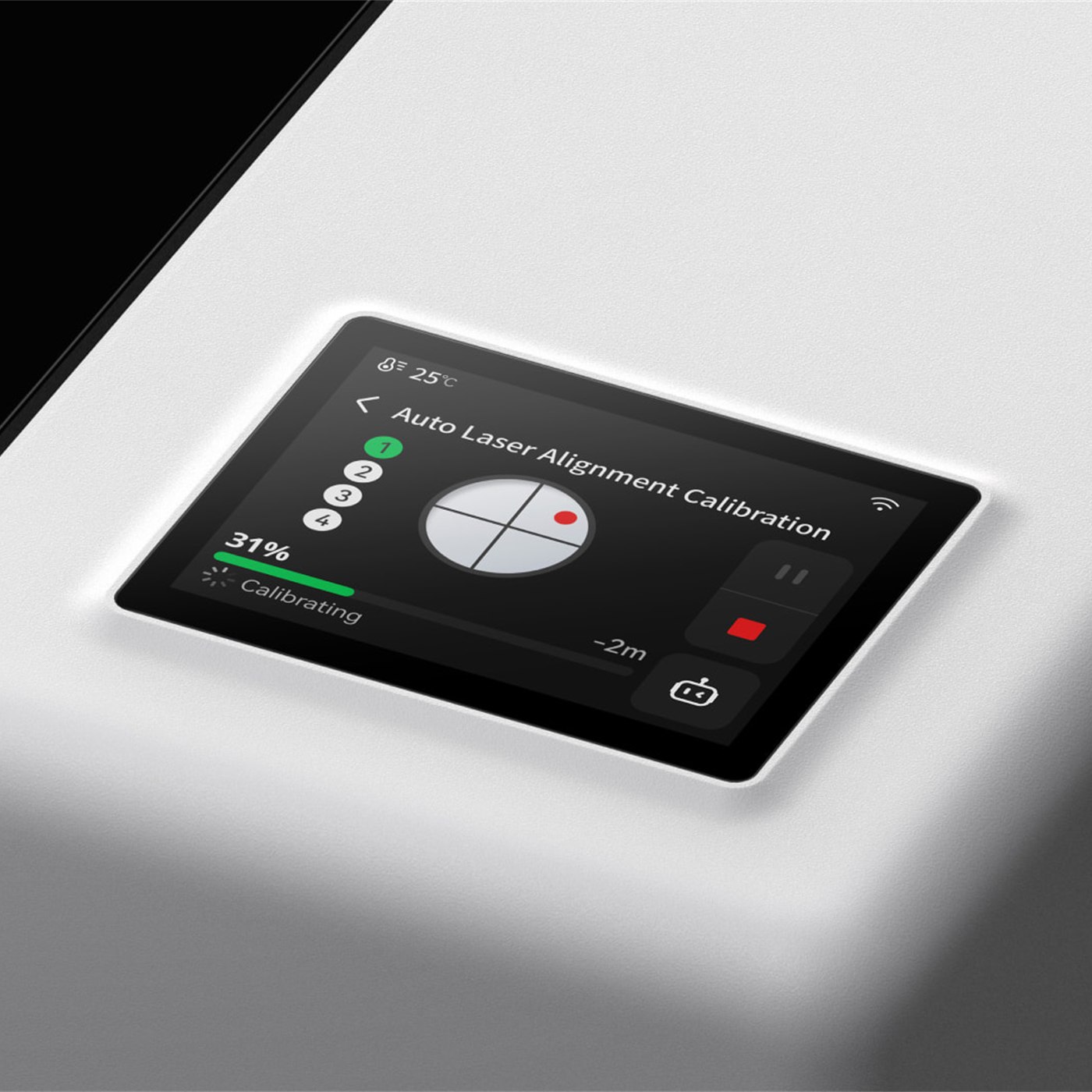
The Laser Alignment Sensor measures and corrects the optical path, replacing manual test shots and tuning.
TriSense positioning
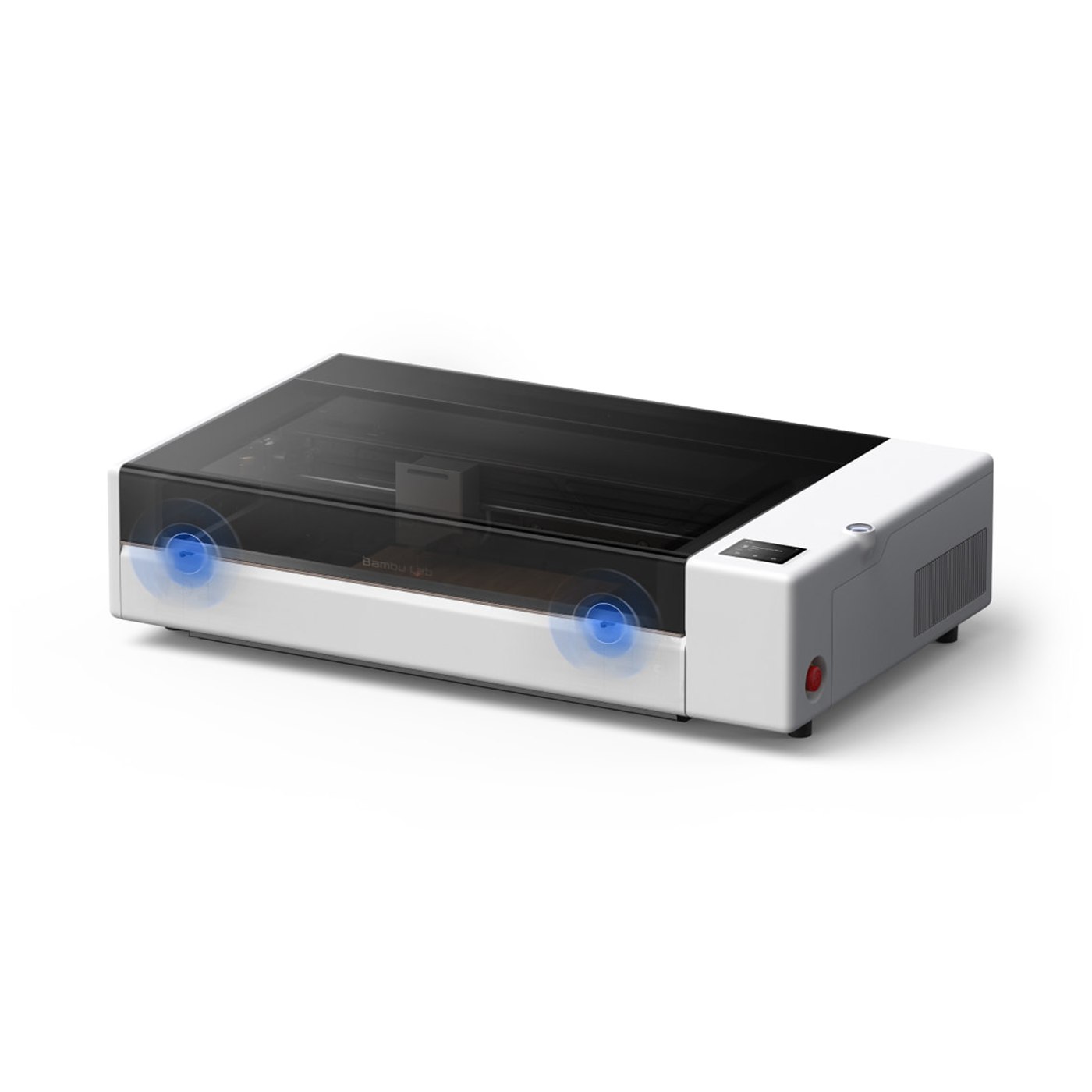
Dual cameras, dual lasers and dual encoders place cuts on curved, clear and small workpieces.
Class 1 enclosed
Class 1 laser safety in standard enclosed use, with lid-open stop, flame detection and emergency stop.
Features
What makes this model different
A CO₂ laser with Bambu motion control
The R1 pairs a 55W CO₂ laser with the motion control used in Bambu Lab printers: vibration compensation keeps lines crisp through direction changes, and speed stays consistent at up to 1000 mm/s.
Why it matters: Faster jobs without trading away edge quality, especially on detailed engraving.
Setup without test shots
Mount the Laser Alignment Sensor on the toolhead and the R1 measures the beam, finds the misalignment and corrects the optical path automatically — Bambu Lab quotes about one minute for the procedure.
Why it matters: Less trial and error before the first cut, and fewer wasted sheets of material.
From flat stock to finished pieces
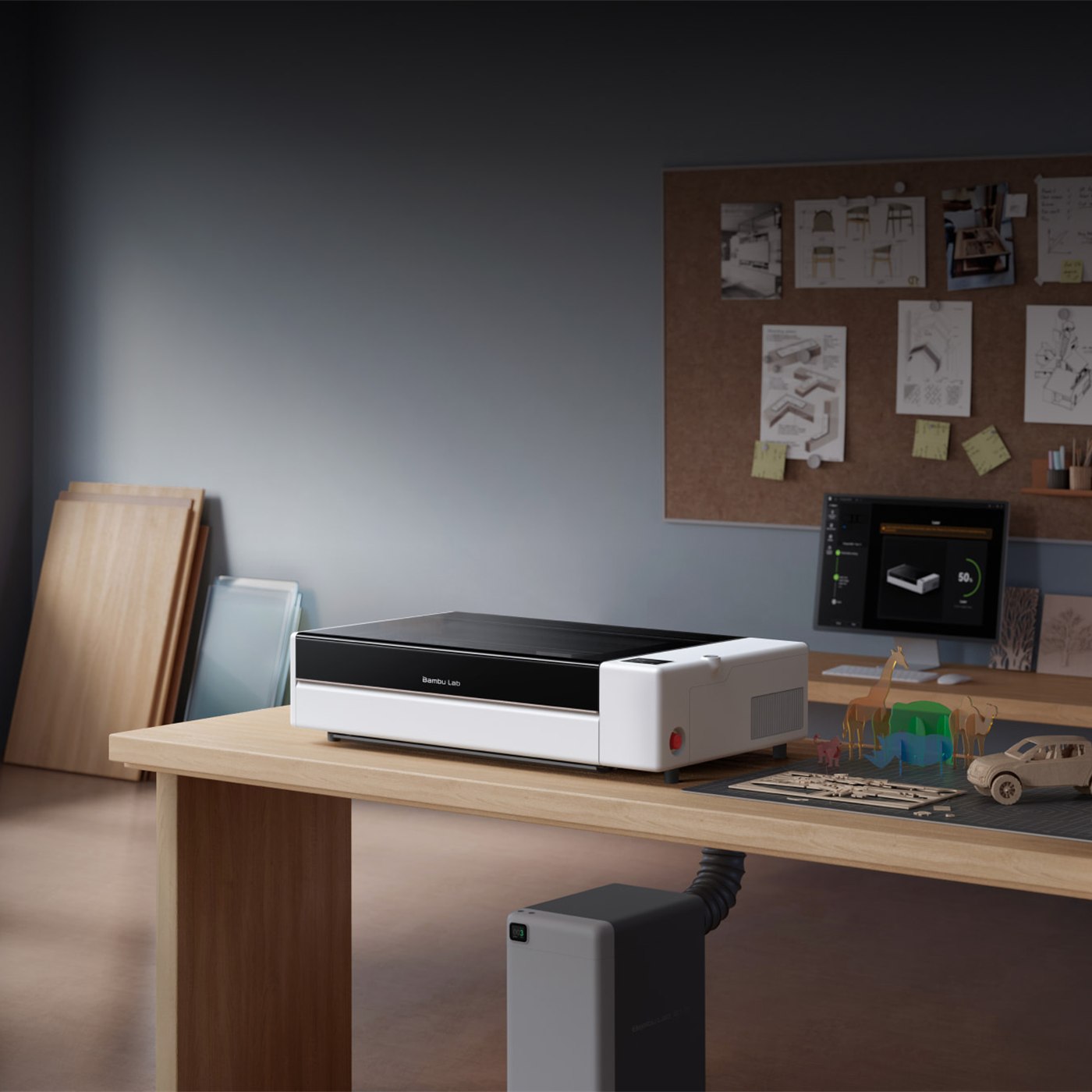
The R1 cuts and engraves wood, clear acrylic, leather and more. The work area takes 600 × 300 mm stock, and the optional Conveyor extends that to 600 × 3000 mm for boards that become furniture.
Why it matters: One machine covers small engraved gifts and full-size flat-pack parts without changing tools.
Designed for everyday rooms
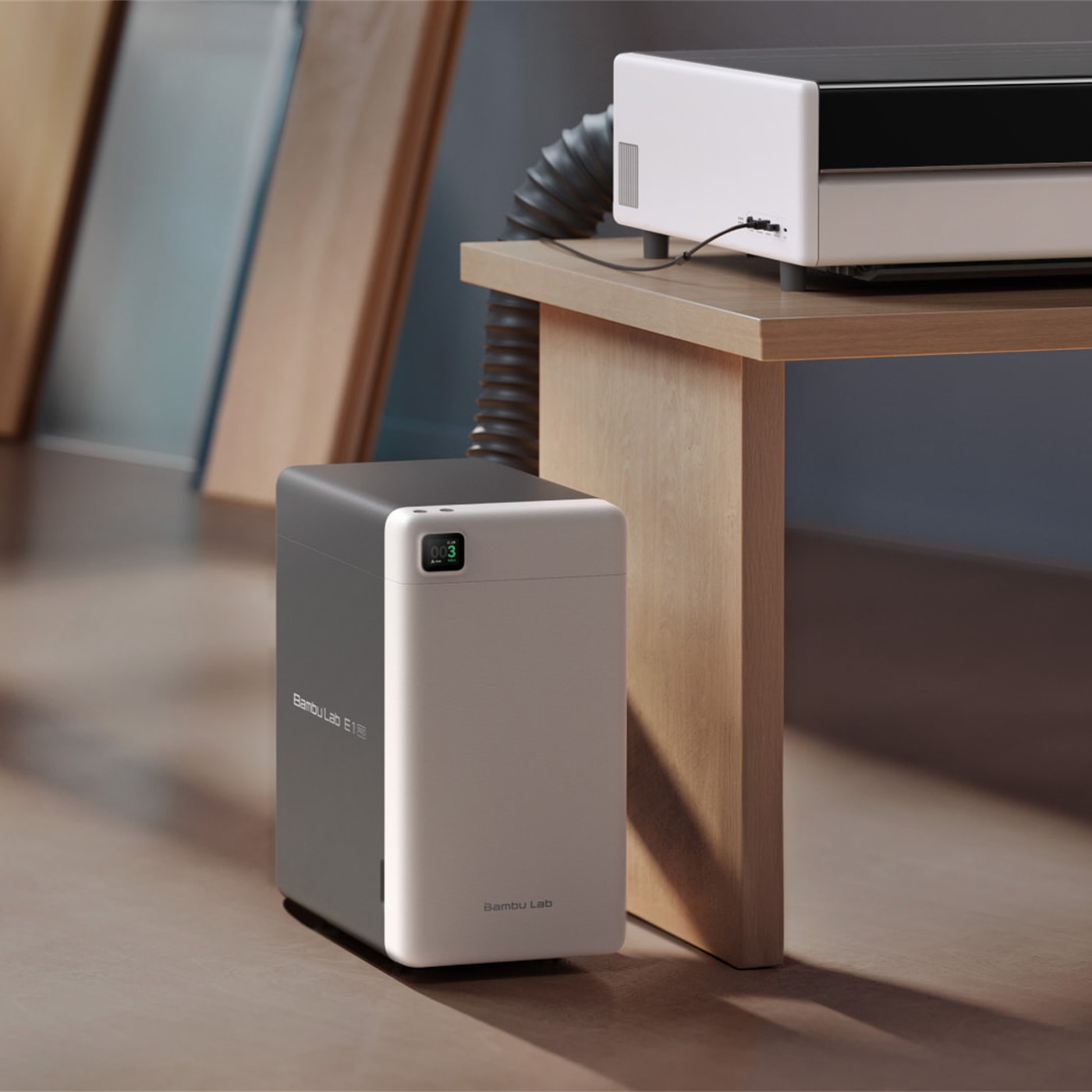
Crossflow ventilation draws air across the work area towards the exhaust, and the enclosed Class 1 design needs no goggles or dedicated laser room in standard use. The optional E1 Pro Air Purifier connects to the exhaust outlet.
Why it matters: Makes a laser cutter practical in a workshop or classroom, provided the ventilation guidance is followed.
Specifications
Technical details
| Laser type | 55W CO₂ laser |
|---|---|
| Working area | 600 × 300 mm standalone; 600 × 3000 mm with Conveyor |
| Max material size | 710 × 380 mm standalone; up to 610 mm wide with Conveyor |
| Max cutting capacity | Medium/long focus: 18 mm black walnut plywood, 20 mm acrylic (single pass) |
| Supported materials | Cut & engrave: wood, acrylic (incl. clear), leather, fabric, paper, EVA foam, shell. Engrave only: coated metal, glass, ceramic |
| Max speed / acceleration | 1000 mm/s; 20,000 mm/s² |
| Spot size | Short focus Ø0.11 mm; medium Ø0.17 mm; long Ø0.19 mm |
| Accuracy | <0.1 mm at 600 mm with Vision Encoder; positioning accuracy <0.2 mm |
| Positioning system | Dual-camera, dual-laser and dual-encoder (TriSense); automatic ranging and autofocus |
| Safety | Class 1 enclosed; lid-open protection, flame detection, emergency stop, safety key. Auto fire extinguishing requires the optional system |
| Dimensions / weight | 940 × 560 × 200 mm; 33.5 kg |
| Input power | 100–240 VAC, 50/60 Hz |
| Software | Bambu Suite (Windows, macOS) |
| Connectivity | Dual-band Wi-Fi (802.11 a/b/g/n/ac/ax), USB |
Values taken from the official Bambu Lab R1 technical specifications. Accessories such as the Riser Base, Conveyor, Rotary Attachment, focus lenses and E1 Pro Air Purifier are sold separately. Using the Riser Base or Conveyor makes the enclosure incomplete and changes the machine from Class 1 to Class 4 — CO₂ laser-safety eyewear is then required and the machine is intended for trained professional use.
In the box
What's included
- R1 laser engraver and cutter
- Laser Alignment Sensor
- Calibration board and material pin
- Safety key and power cord
- Smoke ventilation hose and fan
Package contents beyond the items listed are being confirmed with the supplier.
FAQ
Questions about this model
- Can the R1 cut clear acrylic and glass?
- The official specification lists clear acrylic as cut-and-engrave, and glass as engrave only. Bare metal cannot be engraved; coated metal can.
- Is a laser-safe room needed?
- In standard enclosed use the R1 is Class 1 under IEC 60825-1, so no goggles or dedicated laser room are required. Fitting the Riser Base or Conveyor opens the enclosure and makes it Class 4, which does require CO₂ laser-safety eyewear and trained operation.
- What do the optional lenses change?
- The medium- and long-focus lenses increase depth of focus for thicker stock. The 20 mm acrylic and 18 mm plywood single-pass figures assume one of them; the short-focus lens is listed at 15 mm plywood.
Resources
Official documentation
Technical values come from Bambu Lab's official documentation. Descriptions and guidance on this page are written by The Learning Collection. Image sources are recorded in our internal image manifest.